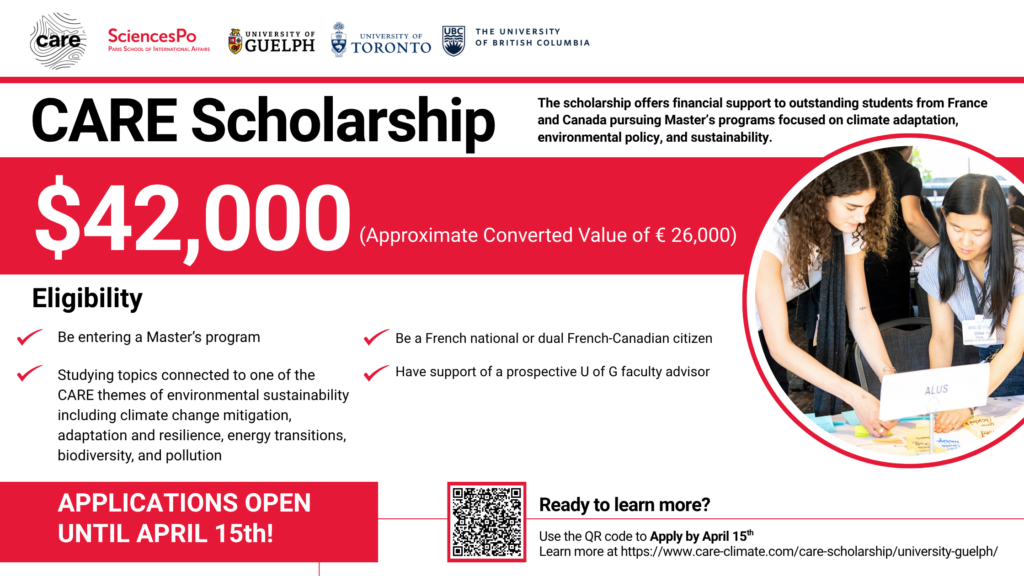
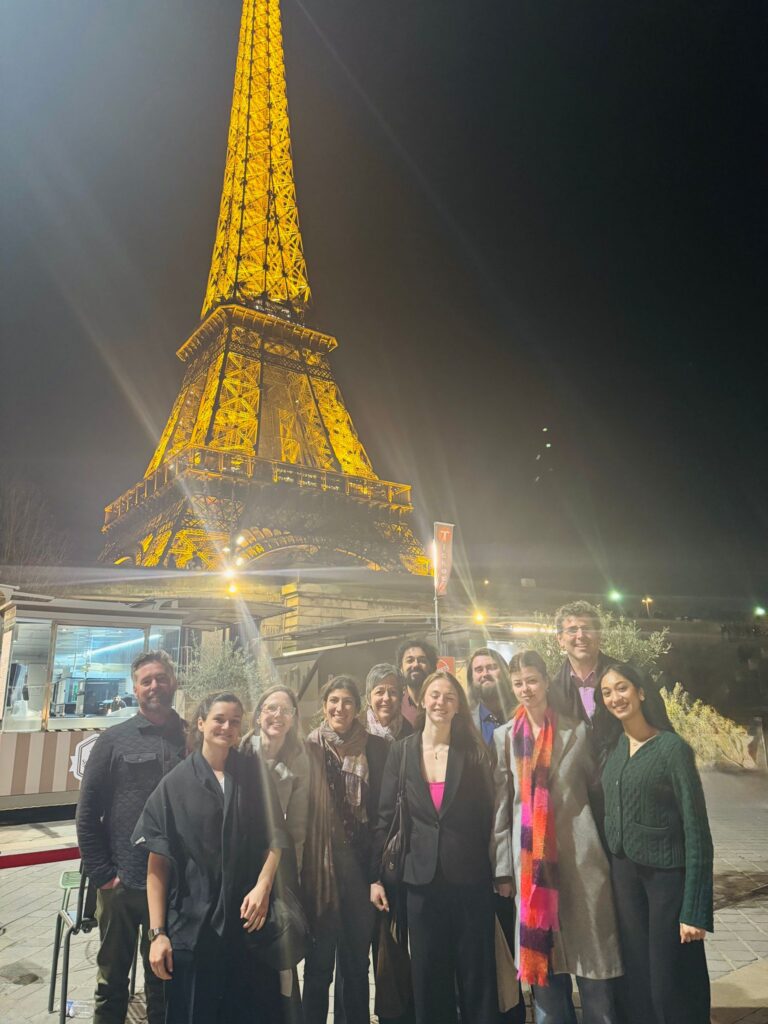
From March 4 to 7, 2026, the Paris School of International Affairs at Sciences Po hosted the 2026 CARE Annual Conference in Paris, France. The event brought together graduate students, faculty, and climate leaders from partner institutions across Canada and France, including the Arrell Food Institute at the University of Guelph.
Focused on the themes Adapting Cities to a 4°C World and Sufficiency as a Guide for Mitigation and Adaptation, the conference created space for interdisciplinary dialogue, experiential learning, and student leadership in addressing some of today’s most urgent climate challenges.
Advancing Climate Leadership Through Collaboration
The Climate Adaptation, Resilience and Empowerment (CARE) program is a collaborative initiative designed to equip emerging leaders with the tools and experience needed to address the climate crisis. Partner institutions, including the University of Guelph, University of Toronto, University of British Columbia, and Sciences Po, came together to foster a global learning environment grounded in research, policy, and practice.
For students connected to the Arrell Food Institute, the conference offered a unique opportunity to explore how food systems intersect with climate adaptation, sustainability, and equitable policy development.
Student Research and Real-World Impact
Graduate students played a central role in the conference, sharing research that addressed climate governance, agriculture, biodiversity, and environmental policy.
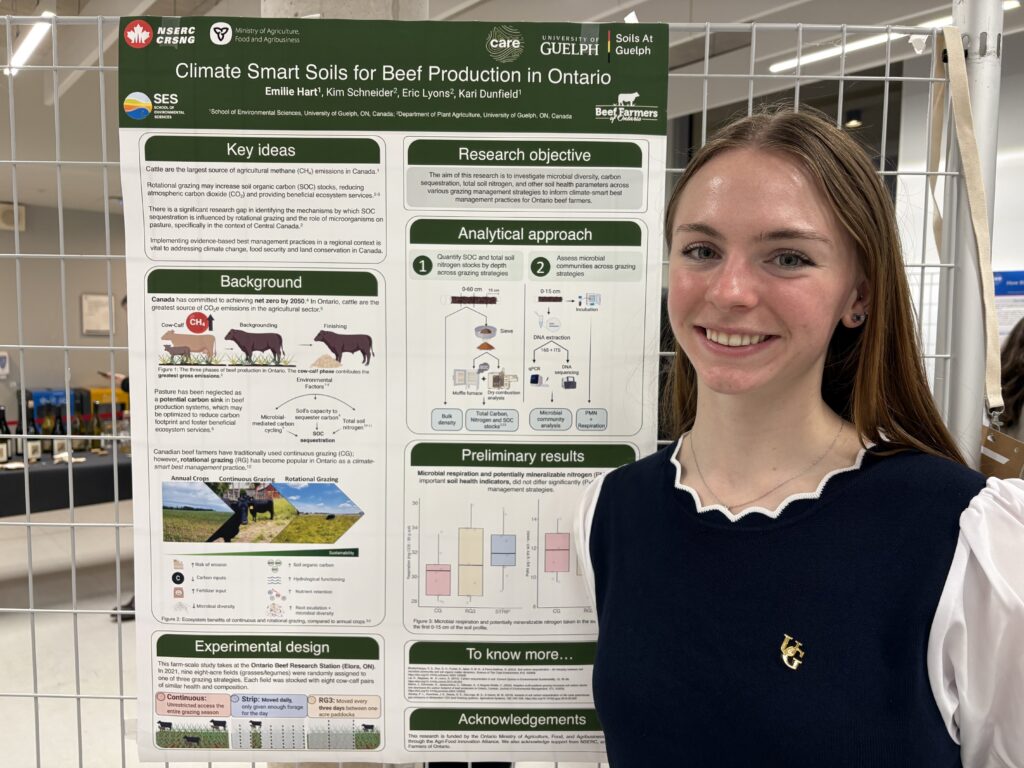
Emilie Hart, Master of Science student in the School of Environmental Sciences, presented her research on carbon sequestration and soil health across grazing management strategies to support climate-smart practices in Canadian beef production. Reflecting on her experience, she shared:
“During the conference, I learned about climate policy negotiation with a diverse set of stakeholders, where I brought a science background, while others brought economic and social science perspectives. During the En-ROADS Climate Workshop, panel discussions, and the tribunal, I developed policy-negotiation skills and learned to work within international policy frameworks. This experience has shaped my role as a climate leader by restoring my faith in climate action and policy. I was so inspired by how passionate this group of people was and feel a renewed sense of motivation in my climate action.” – Emilie Hart
Emma Pothion, CARE Scholar and Master’s student at the University of Guelph’s School of Environmental Design and Rural Development under the supervision of Dr. Sara Epp, presented research on rural climate adaptation in Ontario, highlighted the value of connecting global perspectives to local practice:
“Through the field visit organized with the City of Paris, I gained firsthand insight into how urban greening initiatives can enhance both environmental and social resilience. Coming from a background in landscape architecture, it was especially insightful to compare approaches I had previously studied in a Canadian context with how municipal actors in France design and implement nature-based solutions. This experience helped bridge theory and practice for me and strengthened my confidence as a climate leader focused on implementing climate solutions at the local scale.” – Emma Pothion
These experiences underscore the importance of integrating scientific research with community knowledge and policy action—an approach central to Arrell Food Institute’s mission.
Experiential Learning in Action
Beyond research presentations, students engaged directly with climate solutions through site visits across Paris. These included urban greening initiatives, biodiversity-focused spaces, and innovative systems for wastewater and nutrient management.
These field experiences allowed participants to see how cities are responding to climate pressures in real time, reinforcing the connection between theory, policy, and implementation.
The Tribunal for the Yet to Come
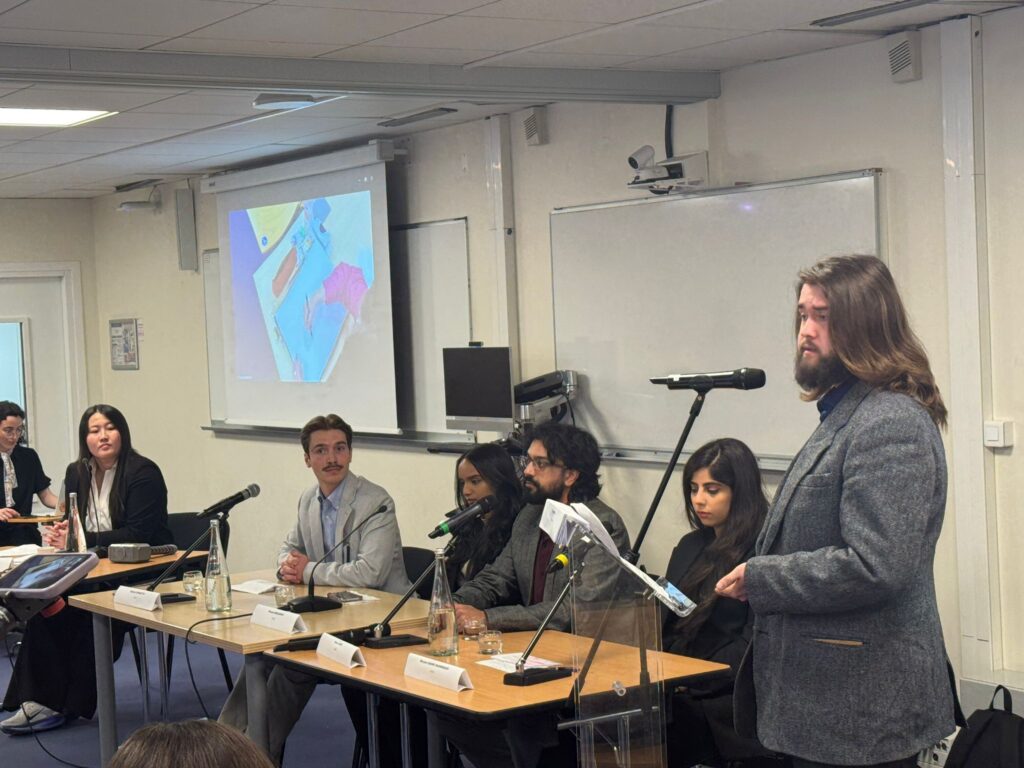
A highlight of the conference was the Tribunal for the Yet to Come, a student-led simulation exploring climate justice and intergenerational responsibility. Participants developed evidence-based cases addressing climate inaction and presented policy recommendations grounded in research.
For many students, the tribunal was a transformative experience.
“The CARE conference was an incredibly enlightening experience that I consider myself lucky to have participated in. The breadth of the research focuses of my peers put the current state of climate science and governance in a new light, while my participation in the Tribunal for the Yet to Come provided an invaluable glimpse into what the future may look like with conference participants at the helm. I’m sure I will look back on this conference as a formative experience to my career and research trajectory.” – Tristan Cook, School of Environmental Design & Rural Development, University of Guelph
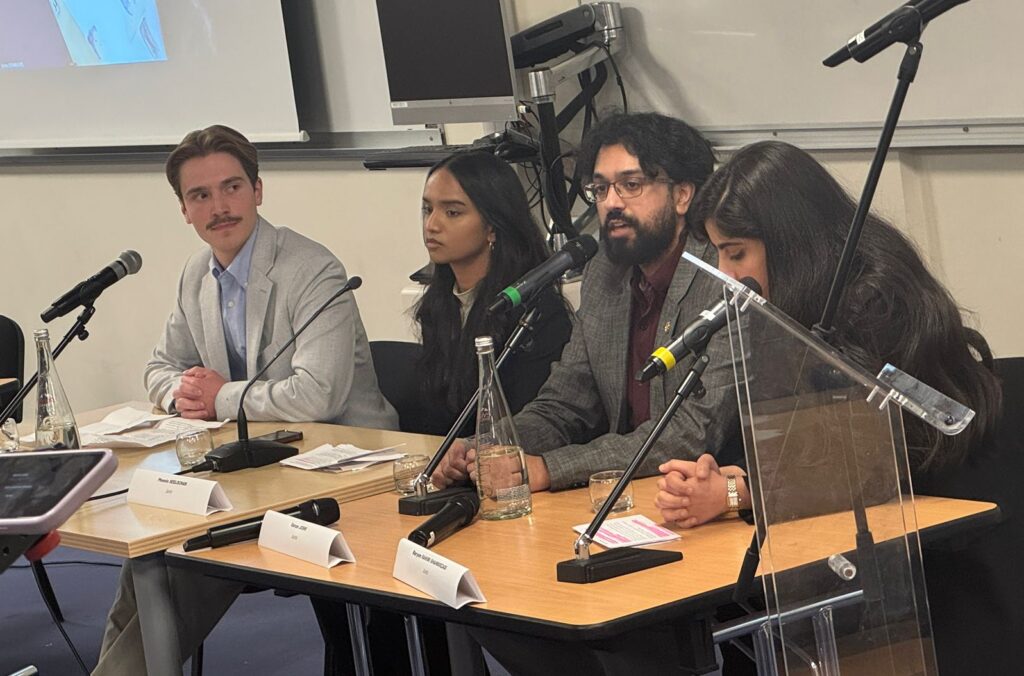
“As the only PhD candidate and sociologist/criminologist at the conference, I approached the discussions through a critical socio-legal lens. I was struck by the strong focus on fossil fuels, while animal agriculture remained largely underexplored. At the same time, I recognize how difficult these conversations can be, as they challenge embedded cultural and consumption practices. Participating in the Tribunal reinforced how certain harms are normalized, and this experience strengthened my role as a climate leader by pushing me to engage in these conversations in more neutral and productive ways while advocating for more holistic sustainability frameworks.” – Varun Joshi, PhD Candidate, Department of Sociology & Anthropology, University of Guelph
Building a Community of Climate Leaders
Throughout the conference, students connected with peers, researchers, and practitioners across disciplines and geographies, building relationships that will extend far beyond the event itself. These exchanges created space not only for sharing knowledge, but for challenging perspectives, strengthening communication skills, and deepening their understanding of how to translate research into meaningful action.
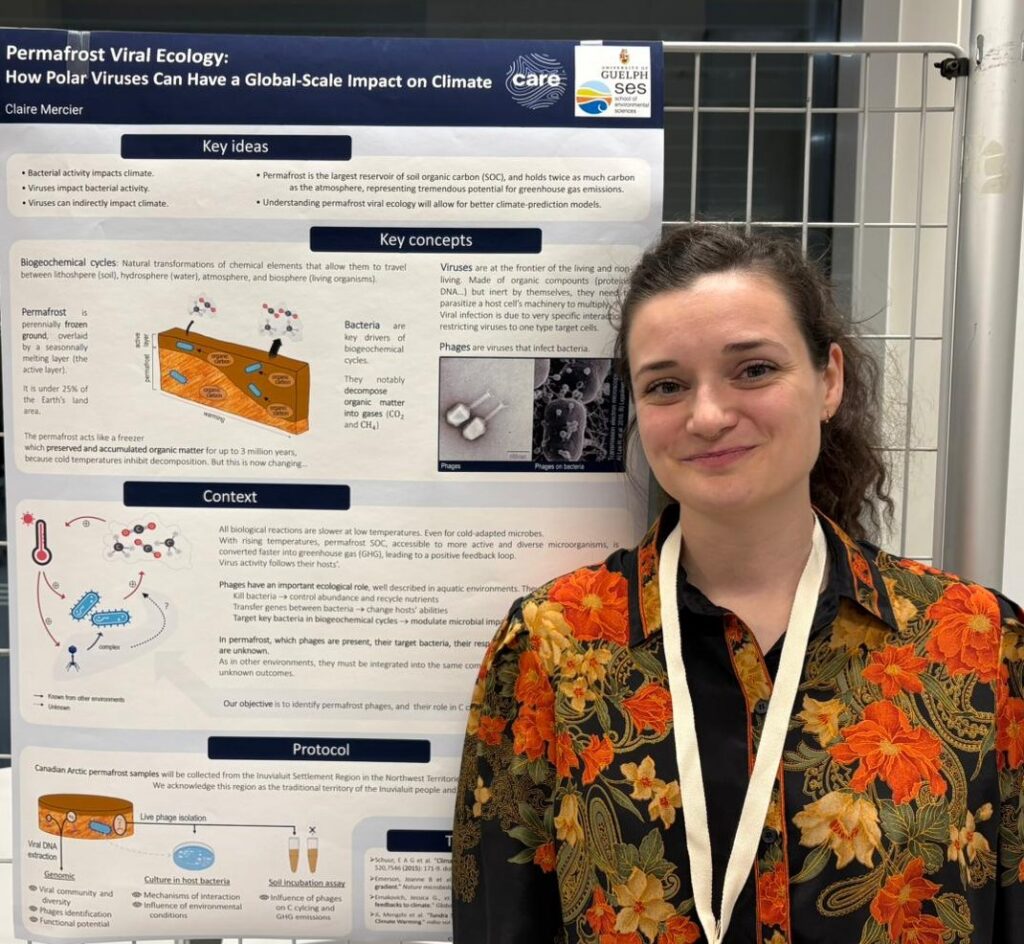
Claire Mercier, CARE Scholar, Master’s student in U of G’s School of Environmental Sciences under the supervision of Dr. Jackie Goordial, captured this sense of momentum:
“As an environmental scientist, the CARE 2026 Annual Conference (and the CARE program as a whole) showed me ways to translate my research into action, particularly by learning how to communicate in the language of policymakers. Meeting all the other participants also gave me a lot of hope for our future as climate leaders.” – Claire Mercier
Looking Ahead
The 2026 CARE Conference highlighted the power of bringing together research, policy, and practice to address complex climate challenges. For students connected to the Arrell Food Institute, it reinforced the importance of interdisciplinary collaboration and the critical role food systems play in shaping sustainable and equitable futures.
As these emerging leaders continue their work, experiences and opportunities brought forward by the Climate Adaptation Resilience Empowerment program (CARE) help ensure these learners and future climate leaders are not only equipped with knowledge, but with the confidence and networks needed to drive meaningful change.
Applications for the CARE Scholarship are currently open until April 15th, offering students the opportunity to take part in future CARE programming and gain hands-on experience at the intersection of climate, policy, and practice. For more information, or to apply now, check out the 2026 CARE Scholarship Self-Identification Form.