Food, climate and entrepreneurial leaders gathered to discuss solutions for a more resilient future
Climate conversations often focus on energy and transportation. Yet food systems are a huge piece of the climate puzzle. Food and agriculture account for roughly one-third of global greenhouse gas emissions while also acting as carbon sinks. This disconnect misses a huge opportunity: using food as a climate lever to build a better future.
That reality was at the centre of Food: The Other Big Climate Lever, co-hosted by the Arrell Food Institute, which brought together leaders from agriculture, Indigenous knowledge advocates, government, investment, culinary innovation and entrepreneurship. Together, they explored a core question: How can we feed ourselves while building a more resilient and climate-friendly future?
In his opening remarks, AFI Executive Director Dr. Evan Fraser challenged attendees to think about the lessons of the 1930s Dust Bowl — a period marked by economic hardship, geopolitical instability and environmental collapse.
“History teaches us what happens when food systems fail, and I believe that this moment asks, ‘will we build food systems that can adapt?’,” Fraser said.
While the Dust Bowl demonstrated the devastating consequences of food system failure, Fraser argued it also revealed something equally important: the power of innovation, community and good governance to build resilience.
Five themes emerged throughout the morning:
Food is one of our biggest climate levers — but one of our least discussed
While recent international climate conferences have elevated discussions around food and agriculture, many experts argue the sector remains underrepresented relative to its outsized influence on both climate change and climate resilience.
From farms and fisheries to grocery stores and restaurant kitchens, food touches nearly every aspect of our lives. Several speakers noted that Canada is uniquely positioned to lead with our research capacity and agricultural expertise that can help advance climate-smart food production.
Climate resilience starts on farms
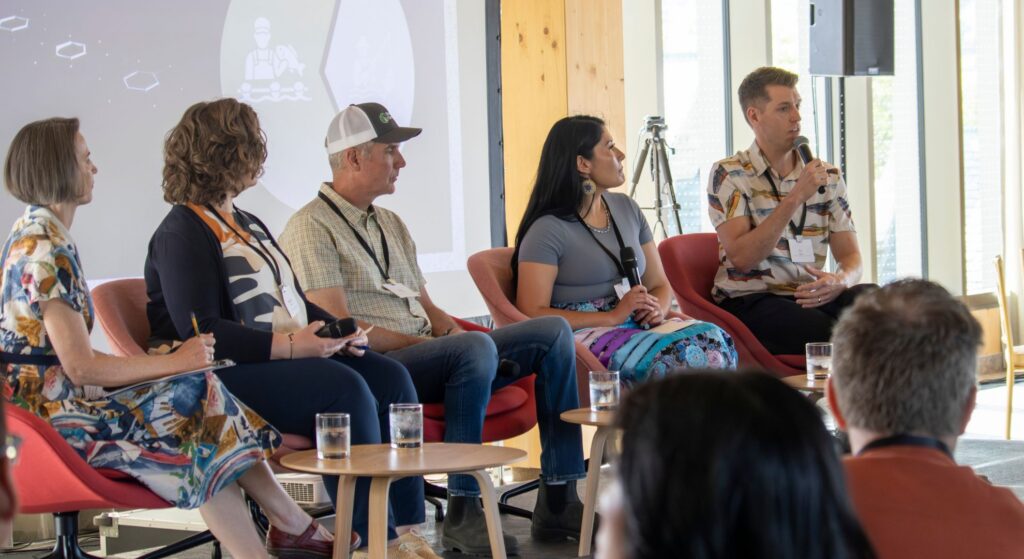
Regenerative agriculture is gaining attention for its ability to address multiple challenges simultaneously through practices such as cover cropping, reduced tillage, rotational grazing and increasing biodiversity.
“The regenerative organic practices that we use on our farm are designed to put carbon back in the soil, support biodiversity and reduce greenhouse gas emissions, while at the same time making farms more resilient to climate change and extreme weather,” said Brent Preston, co-owner of The New Farm Centre and president, Farmers for Climate Solutions.
Aquaculture was mentioned as an area where innovation and environmental stewardship can work hand in hand. RJ Taylor, co-owner of Springhills Fish, challenged misconceptions about fish farming, pointing to research that suggests responsibly managed aquaculture operations can support local ecosystems. Taylor noted that nutrients from fish farms can support aquatic ecosystems and contribute to healthy wild fish populations.
The message was clear: resilience is not only built through technology and infrastructure. It can be cultivated from the ground up. Healthy soils and waterways are practical tools for strengthening food security, supporting farmers and addressing climate change.
Diversity is essential to climate solutions
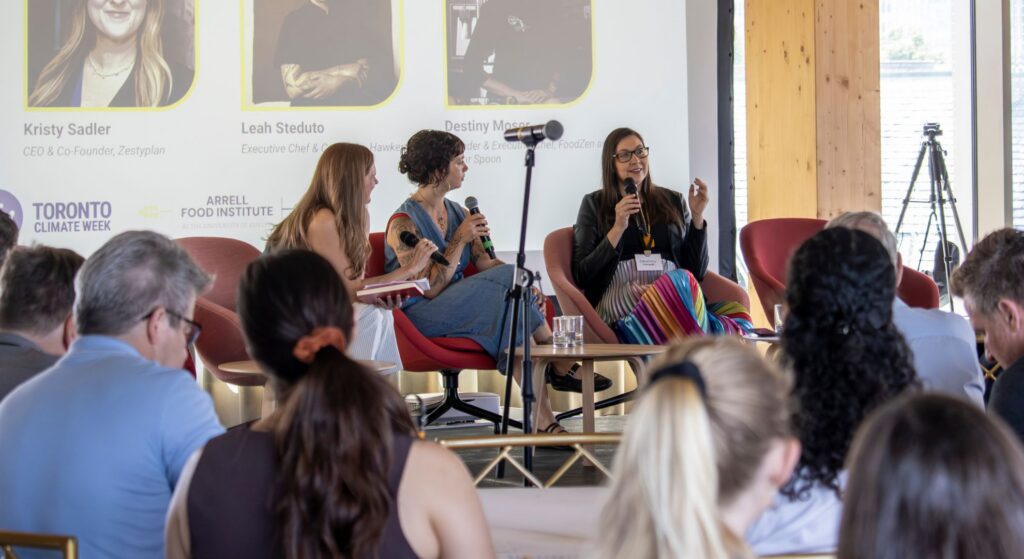
Building resilient food systems requires more than technological innovation — it requires listening to diverse perspectives and ways of knowing. Preston noted that people may not always share the same reasons for taking climate action. Farmers could adopt regenerative farming for climate reasons, economic benefits or greater independence. “Progress can be made across cultural divides if you focus on shared actions rather than motives,” he said.
Traditional knowledge offers guidance and wisdom for a sustainable food system, said Ashley Lyons from Tkà:nios – It Grows, a Haudenosaunee food sovereignty organization. The moon cycles guide seasonal practices, and heritage seeds reflect the ability to adapt.
Innovation is happening across the entire food system
Climate solutions can emerge from every corner of the food system, from investment and urban agriculture to aquaculture and alternative proteins. But it requires collaboration across sectors to scale changes.
Mary Dimou, managing partner at Nàdarra Ventures, pointed to the opportunities and challenges associated with emerging food technologies.
“When it comes to cultivated foods, there are a lot of definitions and regulations that need to be accounted for, but there are ways to work with them to continue to innovate,” Dimou said.
For urban agriculture innovator Jill Doucette, co-founder of FED Urban Agriculture in Victoria, BC, the biggest challenge was not finding the land to grow food. It was making the project work on a small budget so that others could recreate it.
Climate solutions are surprisingly delicious
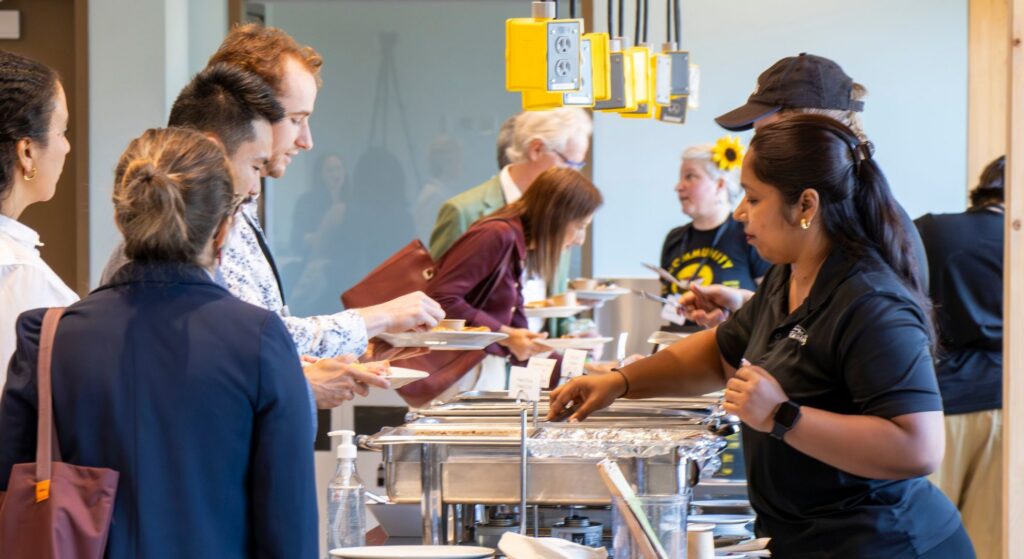
The day concluded with a focus on food waste, highlighting both its environmental impact and the opportunities created by circular food systems and food rescue initiatives.
For Yasi Zorlutuna, Community FEWD project lead and community chef, changing how we think about waste is an important first step. “As a chef I want to reframe the narrative of food ‘waste’. It is a food surplus, and it is a byproduct of industrial food production,” she said. “As chefs we are the perfect food rescuers, and we are the leaders needed to shift our food system to one that’s more sustainable for people and planet.”
Optimism amid climate uncertainty
The conversations at Toronto Climate Week offered reasons for optimism. Throughout the day, speakers emphasized that the future of food is not defined by the climate crisis alone, but by our capacity to adapt. If climate change is one of the defining challenges of our time, this event revealed food can be one of the solutions.