2026 Arrell Food Summit
Feeding Canada, Feeding the World
Arrell Food Institute was proud to host the ninth annual Arrell Food Summit at the Four Seasons Hotel Toronto on November 6, 2026.
Continue reading to explore highlights and outcomes of the 2026 Summit.
“The point is that the shift to agrarian technology […] need not lead to that model of centralized power. It can also lead to other sorts of models in which power is widely shared.”
-Dr. Timothy Snyder, Author and Professor at the University of Toronto
Watch the 2026 Arrell Food Summit Recordings
View the Photo Gallery
Listen to the Lunchtime Playlist
Morning Sessions
The morning sessions of the 2026 Arrell Food Summit explored the role of food systems in global security, economic prosperity and international cooperation, highlighting Canada’s potential to become a global leader in building a more resilient and sustainable food future.
Opening the Summit, historian Dr. Timothy Snyder examined the historical relationship between food, conflict and geopolitical power. Owning the Podium: Canada’s Potential as a Food Leader explored how strategic investment, infrastructure and trade partnerships can strengthen Canada’s position in global food security. Beyond Big Data highlighted how satellite imagery and artificial intelligence can help anticipate food system disruptions, while Quick Bites, Big Ideas: Rethinking Food Innovation showcased the importance of Indigenous knowledge, community leadership and social innovation.
Together, the discussions reinforced that feeding Canada and the world requires more than increasing production. It demands investment, innovation and collaboration that connect economic opportunity with environmental sustainability and food security for all.

The Power of Food: From a Weapon of War to a Path for Peace
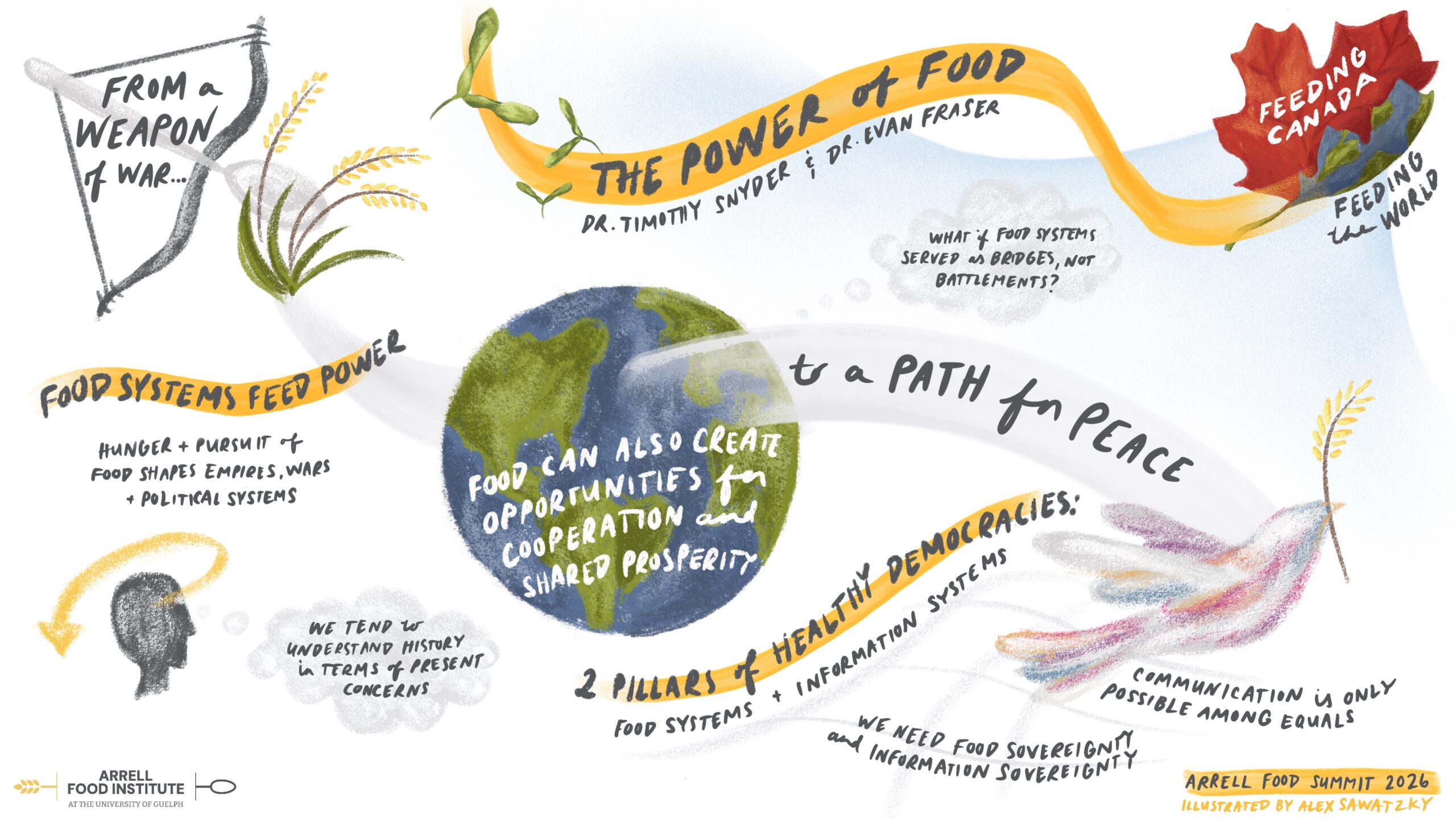
Throughout history, food has played a central role in shaping empires, driving conflict and influencing global power. At the 2026 Arrell Food Summit, renowned historian Dr. Timothy Snyder joined Dr. Evan Fraser, executive director of Arrell Food Institute, for a fireside chat exploring the relationship between food, geopolitics and international security.
Drawing on historical examples, Snyder examined how competition for agricultural resources influenced the ambitions of Nazi Germany and the Soviet Union, with both regimes viewing control over Ukraine’s fertile lands as essential to their power. The discussion connected these historical struggles to contemporary geopolitical tensions, including threats to national sovereignty and the growing importance of food security in international relations.
Looking ahead, the conversation explored how Canada could use its agricultural strengths to support greater global stability through food diplomacy, international trade and cooperation. Snyder emphasized the importance of stronger partnerships between middle powers as an alternative to imperial competition. The discussion reinforced that food systems are not simply economic or agricultural concerns, but strategic assets that can help Canada strengthen its international relationships and contribute to a more secure and peaceful world.

Owning the Podium: Canada’s Potential as a Food Leader
Justine Hendricks, president and CEO of Farm Credit Canada (FCC), delivered a keynote address exploring Canada’s potential to become a global leader in agriculture and food. She emphasized that realizing this opportunity will require ambitious action, strategic investment and stronger collaboration across the sector.
Hendricks highlighted the need to diversify export markets, strengthen infrastructure and mobilize capital to support innovation and productivity. She also outlined FCC’s efforts to attract new investment into Canadian agriculture and food processing.
Following the keynote, Hendricks was joined by University of Guelph President Rene Van Acker and former federal deputy minister Chris Forbes for a panel discussion moderated by Kate Helmore of The Globe and Mail. The conversation examined barriers to Canada’s growth, including fragmented advocacy, limited coordination and the need for stronger national food policy. Together, the speakers emphasized that Canada has the resources and expertise to lead, but success depends on turning potential into coordinated action.

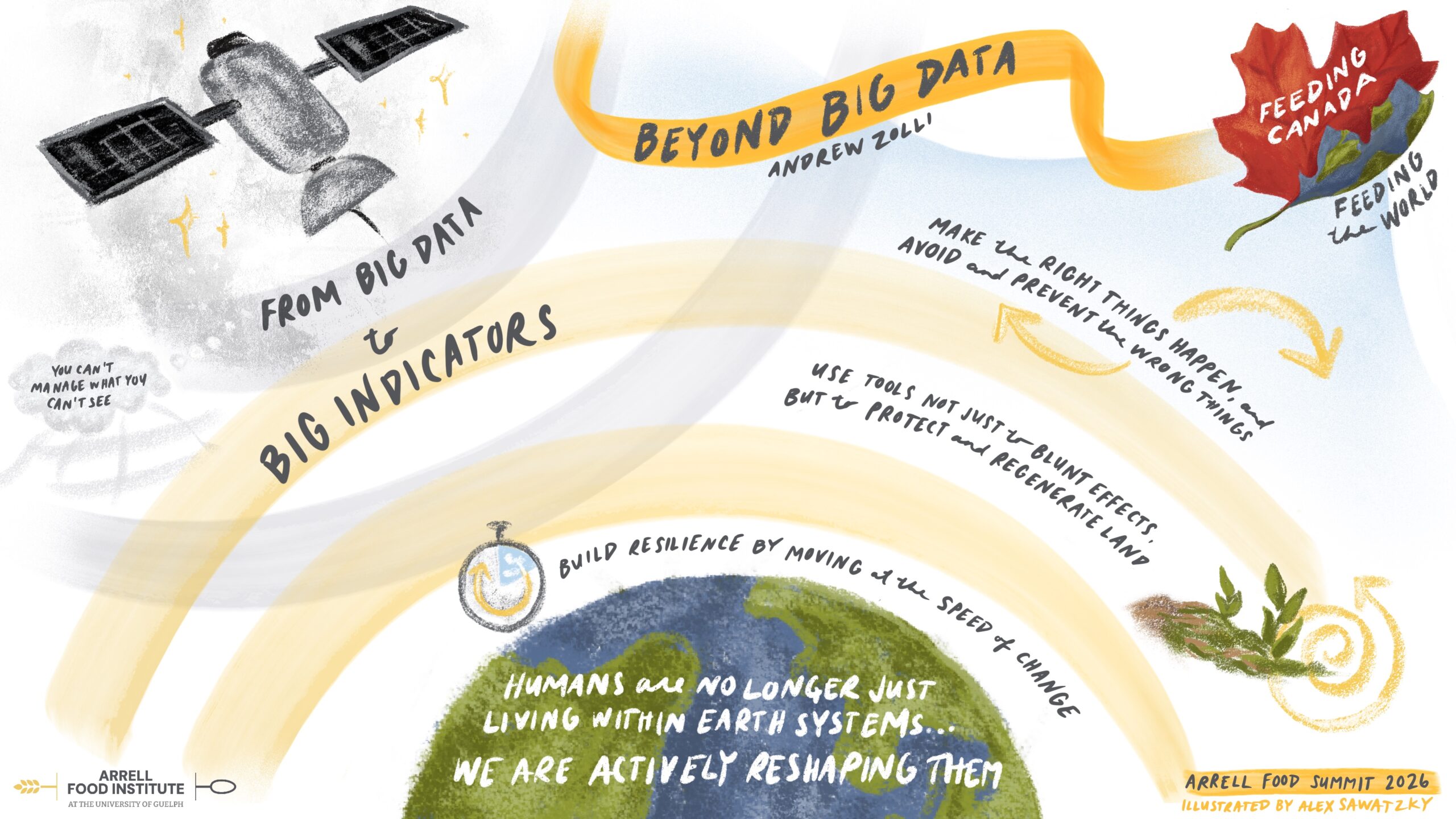
Beyond Big Data: How “Big Indicators” Drive Global Action
Andrew Zolli, Chief Impact Officer of Planet explored how satellite imagery, artificial intelligence and predictive analytics are transforming our ability to monitor global food systems and respond to emerging challenges.
Drawing on examples from around the world, Zolli demonstrated how Earth observation technologies can help farmers improve resource efficiency, track crop productivity and anticipate disruptions caused by drought, flooding and conflict. He highlighted new initiatives that combine satellite data with AI to identify early signs of food insecurity, allowing governments and humanitarian organizations to take action before crises escalate.
The presentation also examined the governance and institutional frameworks needed to ensure these powerful technologies are used responsibly and their benefits are widely shared. This session emphasized the potential to shift from reacting to food system crises towards anticipating and preventing them, strengthening agricultural resilience and global food security.

Vibrant Infrastructure: A Spotlight on Food Hubs
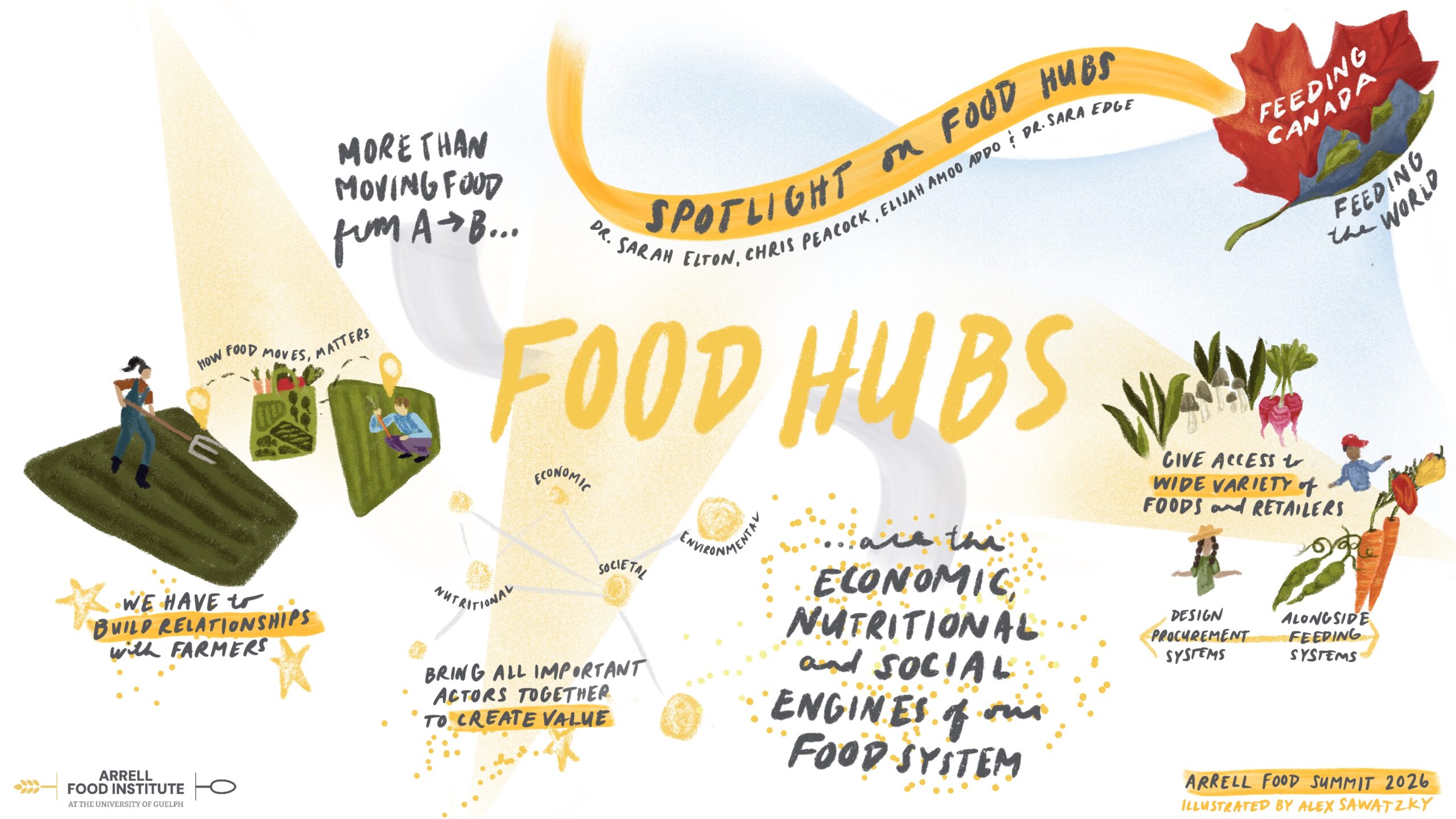
This panel explored how food hubs can strengthen regional food systems, improve affordability and build more resilient supply chains. Moderated by Dr. Sara Edge, Arrell Chair in Food, Policy & Society, the discussion featured Chris Peacock of The Sharing Place Food Centre, Elijah Amoo Addo of Food for All Africa and Dr. Sarah Elton of the University of Toronto.
Panellists examined the role of public food infrastructure in connecting local producers with markets, supporting independent retailers and improving access to nutritious food. Drawing on examples from Ontario and Ghana, they highlighted how food hubs can reduce food waste, support school food programs and generate economic opportunities while strengthening community connections.
With new federal investment in food hubs through Canada’s National Food Security Strategy, the discussion emphasized the importance of supporting existing community infrastructure and measuring success beyond financial returns. Together, the speakers reinforced that food hubs are more than distribution centres. They are vital community assets that can advance food security, regional economic development and social well-being.

Quick Bites, Big Ideas: Rethinking Food Innovation
These two conversations explored how community-led approaches and Indigenous perspectives can help build more inclusive and resilient food systems.
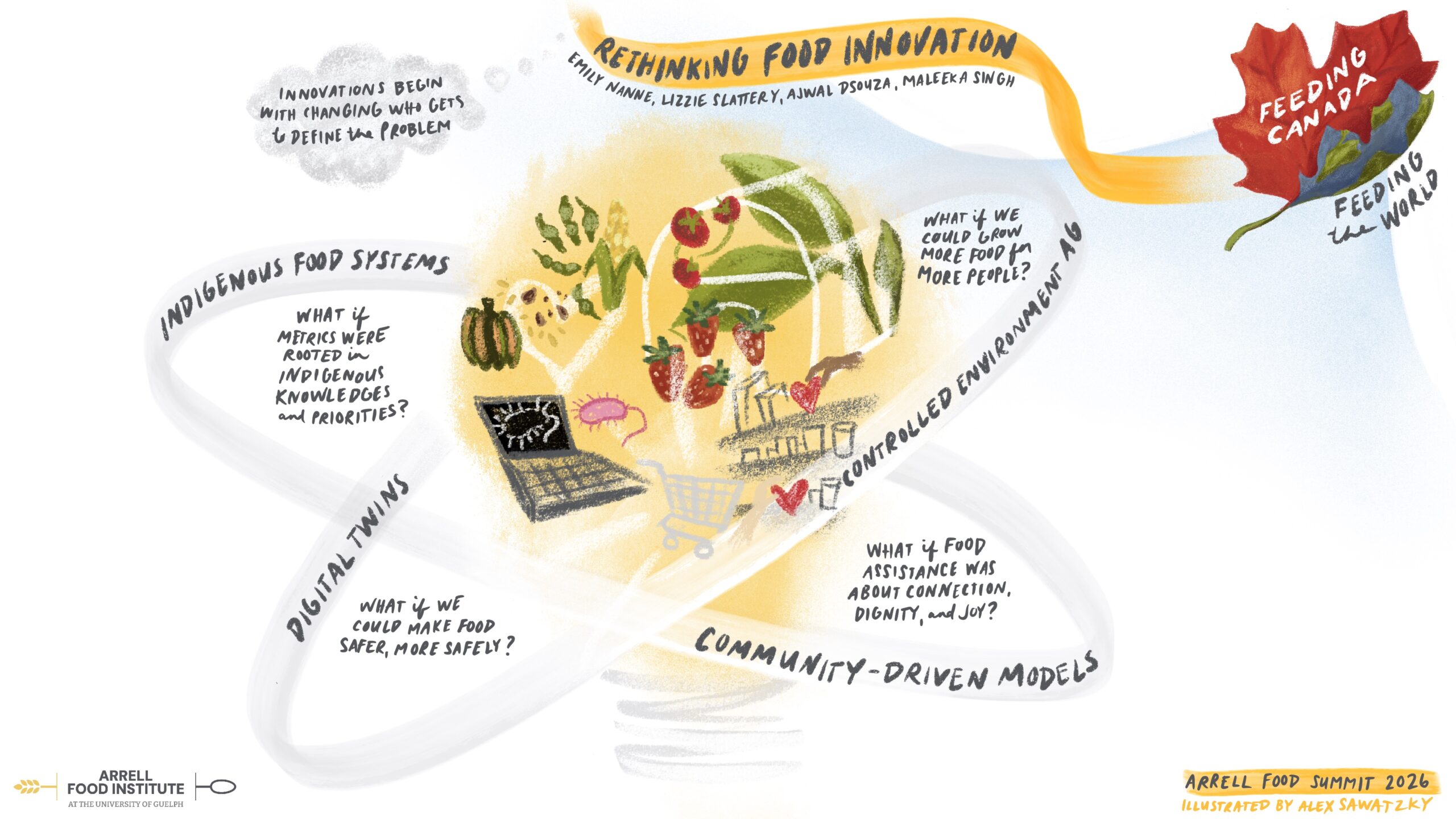
Emily Nanne, founder of Agri-Food Advisory Services, joined Aaron Misener, network activator at AFI, to examine barriers to meaningful Indigenous participation in food systems initiatives. They emphasized the importance of engaging Indigenous communities from the outset, respecting their priorities and ensuring they have genuine decision-making authority rather than simply advisory roles.
In the second discussion, Lizzie Slattery, executive co-director of Carrefour Solidaire Community Food Centre, joined Pauline Cripps, community food lead at AFI, to highlight innovative approaches to addressing food insecurity. Slattery shared how a community food coupon program in Quebec improves access to nutritious, locally produced food while supporting small-scale farmers and strengthening community connections.
Together, the discussions demonstrated that food innovation extends beyond technology, highlighting the importance of community leadership, equitable partnerships and solutions that prioritize dignity and local needs.
“Food security is about, as everybody here knows, […] systems and supply chains. It’s about markets […] One of the things that we can begin to see is how we can use these tools, not just to blunt the sharpest edges and most painful edges of shocks and volatility and disruption, but do the reverse — actually use them to encourage the restoration of the land.”
-Andrew Zolli, Chief Impact Officer, Planet
2026 Arrell Food Summit Visual Notes
Alex Sawatzky, our Creative Lead works at the intersection of research, art and design — fostering relationships that co-create and mobilize knowledge. Over the course of the 2026 Arrell Food Summit, Sawatzky listened to different sessions and has completed visual notes based on different sessions. Scroll through to see her designs from the summit and click on the illustration to see a full size version.
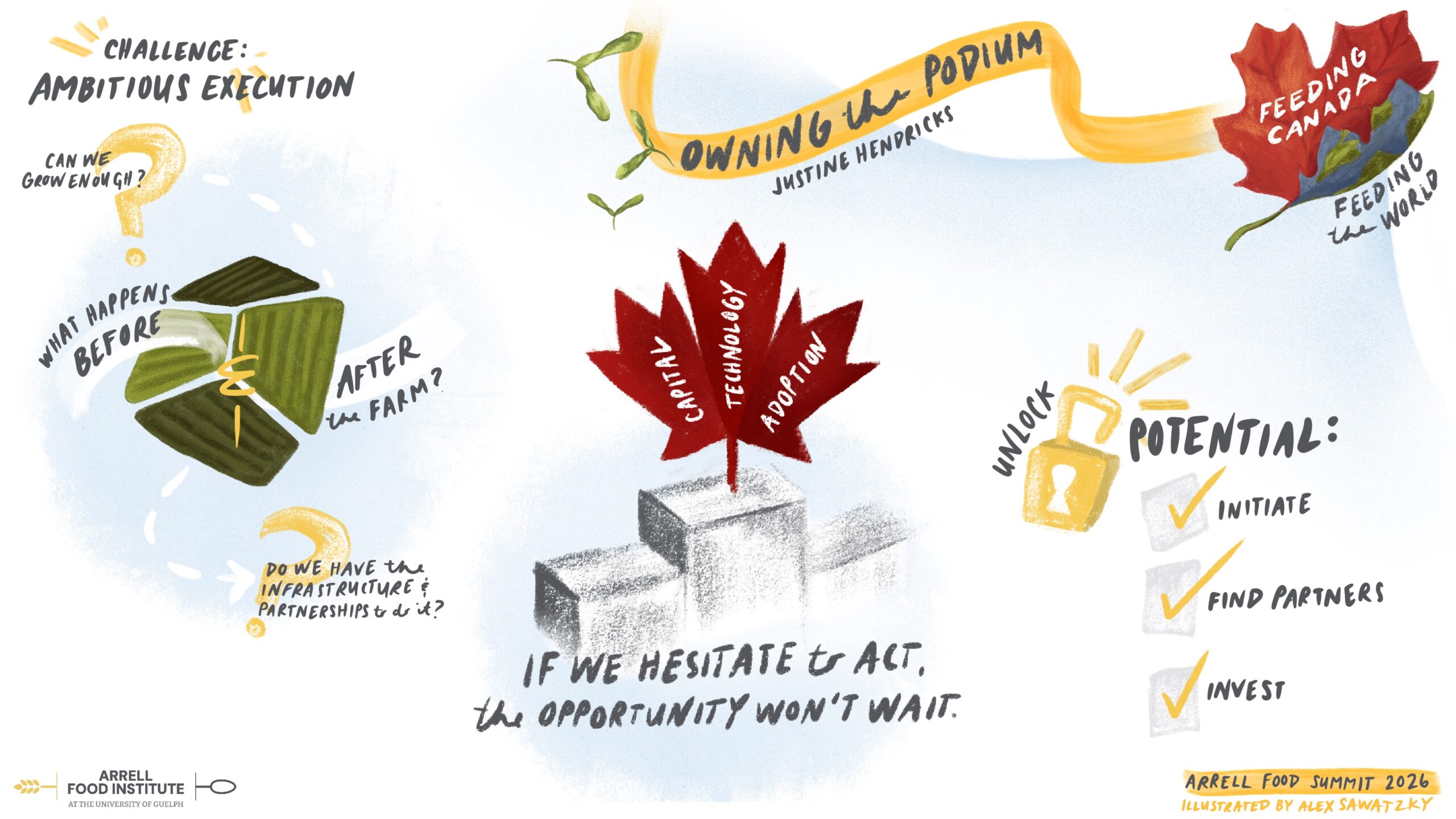
“Food security isn’t just about what happens on the farm. It’s about what happens before and after the farm. I actually think that a more useful question would be this: Do we have the infrastructure, the partnerships, the investments and technology Canada needs to become a food superpower?”
-Justine Hendricks, President and CEO, FCC
Afternoon Sessions
The afternoon sessions shifted the focus toward practical solutions and the collective action needed to build a more resilient, equitable and food-secure future for Canada and the world.
In Quick Bites, Big Ideas, two rapid-fire presentations explored the potential of emerging technologies, highlighting innovations in controlled environment agriculture and artificial intelligence for food safety. The panel Many Voices, One Goal: A Food-Secure Canada broadened the conversation beyond agricultural production and supply chains, emphasizing that meaningful food security must also address systemic inequities, income disparities, Indigenous and Black food sovereignty and the well-being of those working across the food system. The discussion reinforced the need for collaborative approaches that recognize the interconnected social, economic and environmental dimensions of food security.
Looking to the future, student leaders from the Guelph Food Fight presented recommendations from the Guelph Declaration, demonstrating how the next generation can contribute fresh perspectives and actionable policy solutions to some of Canada’s most pressing food system challenges. University of Guelph Chancellor Mary Anne Chambers closed the Summit by reflecting on the day’s discussions and the shared responsibility to translate these ideas into meaningful action toward feeding Canada and feeding the world.

Quick Bites, Big Ideas: PechaKucha Lightning Talks
University of Guelph postdoctoral researchers Dr. Ajwal Dsouza and Dr. Maleeka Singh highlighted how emerging technologies are creating new opportunities to strengthen Canadian agriculture and improve food safety.
Dsouza explored how controlled environment agriculture, including greenhouses and vertical farms, is expanding Canada’s capacity to grow fresh food year-round. Drawing on examples from Nunavut, Prince Edward Island, Quebec and Ontario, he demonstrated how innovations in climate control, resource efficiency and crop production are improving access to locally grown produce while reducing reliance on imports.
Singh presented research into the development of a digital twin of Salmonella, a virtual model that simulates how the bacterium behaves under different environmental conditions. By combining biological data with predictive modelling, this technology could help food processors, researchers and regulators better anticipate contamination risks and strengthen food safety practices.
Together, the presentations demonstrated how research and technology can address practical challenges across Canada’s food system, from expanding domestic food production to preventing foodborne illness.

Many Voices, One Goal: A Food-Secure Canada
This panel of food systems leaders explored the interconnected challenges contributing to food insecurity in Canada and the solutions needed to build a more equitable and resilient future.
Moderated by Jasmine Ramze Rezaee of Right To Food, the discussion brought together Sarah Stern of the Maple Leaf Centre for Food Security, Destiny Moser of FoodZen, Gillian Flies of The New Farm Centre, Imrun Texeira of The Burnt Chef Project and Toyin Kayo-Ajayi of the Canadian Black Farmers Association.
Panellists highlighted the importance of addressing inadequate incomes, advancing Indigenous and Black food sovereignty, supporting the mental health of food system workers and investing in regenerative agriculture. They emphasized that food security extends beyond food production and availability to include affordability, cultural appropriateness and the well-being of those who grow and prepare our food. The discussion reinforced that no single solution can address Canada’s food insecurity crisis. Meaningful progress requires coordinated policy, community-led initiatives and collaboration across the entire food system.

The Guelph Declaration: Solutions from the Leaders of Tomorrow
A team of students presented the Guelph Declaration, a youth-led call to action outlining solutions to strengthen Canada’s food security and resilience. Developed following the Guelph Food Fight, an immersive food systems crisis simulation held in September, the declaration reflected the perspectives of students who explored how Canada could prepare for future disruptions.
The students proposed strengthening domestic food production through climate-resilient crops, investing in regional food processing infrastructure and developing an early warning system to anticipate supply chain disruptions. They also called for a national council empowered to coordinate responses to food crises, alongside stronger networks of community food hubs that improve access to affordable, nutritious food.
Emphasizing the importance of youth leadership and community participation, the students challenged governments, industry and researchers to move from discussion to action. Their message was clear: building a more resilient food system requires collaboration across generations, with young people helping shape the solutions.

Summit Closing – Feeding Canada, Feeding the World
University of Guelph Chancellor Dr. Mary Anne Chambers brought the 2026 Arrell Food Summit to a close by reflecting on the day’s discussions and the opportunities ahead for Canada’s food systems. She emphasized that while food has historically been used as a tool of conflict and control, it also has the potential to advance global stability, prosperity and peace.
Chambers highlighted Canada’s strengths in agricultural research, innovation and food production, while acknowledging the challenges of food insecurity both at home and abroad. She reinforced the importance of human-centred solutions that recognize the people and communities behind our food systems.
Calling on participants to turn ideas into meaningful action, Chambers emphasized that everyone has a role to play in shaping a more resilient and equitable food future. She encouraged attendees to build on the day’s conversations through continued collaboration and measurable progress, ensuring the Summit’s impact extends well beyond the event itself.
“Food can be a force for stability, prosperity and peace. Ensuring that people have access to safe, nutritious and sustainable food may be one of the most important acts of peacebuilding in the decades ahead.”
-Dr. Mary Anne Chambers, Chancellor, University of Guelph
Join Our Network
Stay up to date on the latest Arrell Food Institute events, opportunities, research and agri-food insights. Follow us on Instagram and LinkedIn for timely updates or subscribe to our monthly newsletter below.
Attend an AFI Event Near You
Arrell Food Institute brings together people from across the food system to share ideas, tackle challenges and drive meaningful change. Through research, collaboration and open conversations, we create and share knowledge, build connections and train the next generation of food leaders. Together, we advance solutions for a healthier, more equitable and sustainable food future for everyone.