From fungal biotechnology to cultivated foods, a new partnership connects emerging researchers with Canadian companies working to shape the future of food
The Arrell Food Institute (AFI) at the University of Guelph and Talent Innovation Canada (TICAN) have launched the first placements through their joint Agri-food Program.
Through this program, TICAN offers paid industry research placements that connect graduate students and postdoctoral scholars with Canadian agri-food companies to apply their research expertise to real-world challenges. Participants continue their graduate or postdoctoral research while working on projects that advance research and development, product or process development, commercialization, data and technology applications.
The first placements are underway, with four researchers joining innovative companies advancing fields such as fungal biotechnology and cultivated foods.
“These placements bring together two things Canada needs more of: highly skilled people and the opportunity to put their knowledge to work,” says Evan Fraser, Executive Director of Arrell Food Institute. “For emerging researchers, this is an opportunity to connect academic research with industry needs and put their expertise to work on real-world challenges. For companies, it opens the door to new ideas, specialized expertise and the talent they need to develop solutions and seize new opportunities. That combination can be incredibly powerful for Canada’s agri-food sector.”
From fungal biotechnology to cultivated foods
At Vancouver-based Maia Farms, three University of Guelph researchers are working on projects that explore the potential of fungi in food and human health. A fourth scholar will work with Genuine Taste – a cell-agriculture company working on cultivated fats – to explore the environmental and economic considerations involved in scaling the production of cultivated fats.
Chinaza Arinzechukwu, Postdoctoral scholar with the Department of Food Science
Chinaza Arinzechukwu, a postdoctoral scholar with the Department of Food Science, is exploring how genetic differences between fungal strains influence characteristics such as flavour, texture and performance in food.
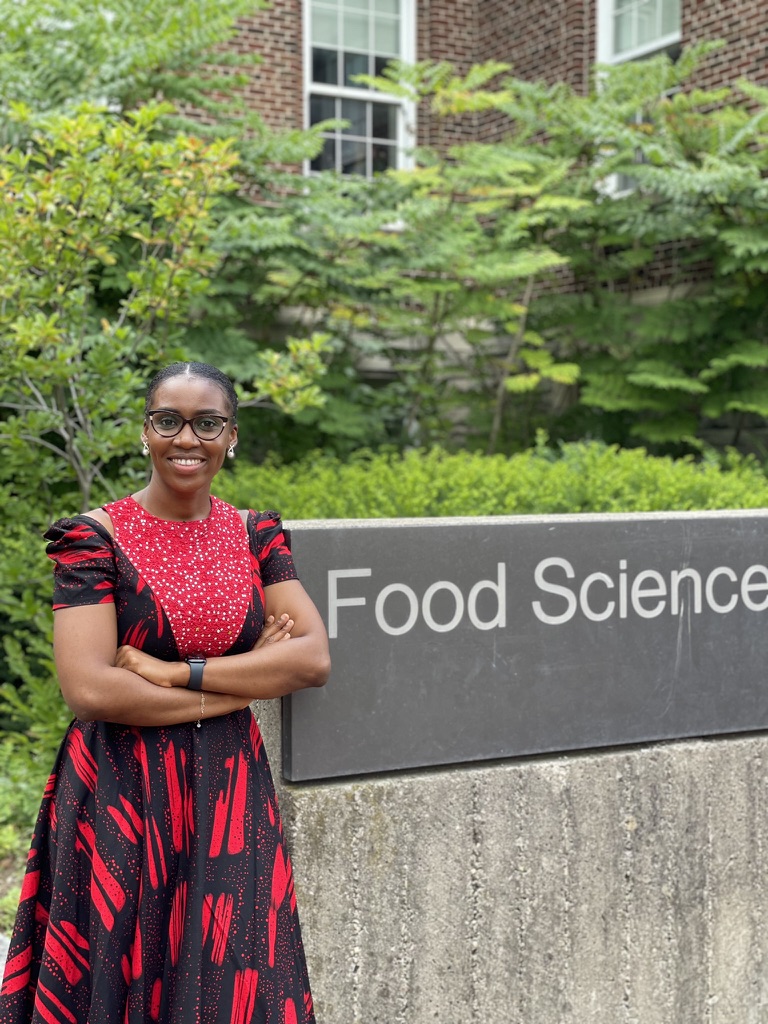
“I am excited for the opportunity to contribute to the development of clean-label protein alternatives that can help meet the nutritional needs of a growing global population. This opportunity with Maia Farms is an experience I couldn’t get from the lab alone. I’ll be gaining hands-on industrial experience while also conducting research that will directly influence scale up and product decisions
One of my long-term goals is to play a significant role in the agri-food sector by ensuring that research outcomes are translated into practical solutions that promote a safe and sustainable food system. This placement is an important step toward that goal. It bridges the gap between academia and industry, allowing me to apply my background in food science to real product development and optimization while building the skills to become a well-rounded researcher who can work across both sectors.”
Himashree Ponrajan, PhD candidate in Food Science
Himashree Ponrajan, a PhD candidate in Food Science, is studying how fungi produce and transform compounds during fermentation. Her work will help build a better understanding of these changes over time and could contribute to improvements in fungal fermentation processes.
“Working with Maia Farms through the TICAN-AFI Agri-food placement Program offers a meaningful opportunity to connect my PhD research in bioprocess engineering with efforts to produce nutritious, sustainable mycoprotein ingredients that support food security. Maia Farms’ inspiring startup journey and the ambition of its team drew me to this opportunity.
I’m grateful to gain this exposure during my studies and learn how a growing company approaches challenges, makes decisions, and turns promising ideas into products. This experience will help shape the academic researcher I aspire to become, someone who asks questions grounded in real-world challenges and builds collaborations to turn discoveries into practical solutions.”

Meenakshi P.L., Postdoctoral scholar in Food Science
Meenakshi P.L., a postdoctoral scholar in Food Science will study how differences between fungal strains affect the production of compounds that could have applications in human health. The research will identify promising compounds and test how they affect human brain cells, helping to better understand their potential health benefits.

“Whenever I was running experiments in the lab, I often wondered how the research could translate into something useful beyond the lab. This opportunity with Maia Farms is exciting because it brings that connection to life.
I’ll be exploring how different fungal strains produce compounds with potential human health applications. It’s fascinating to think that something as small as a fungus could hold cues to something as complex as the human brain. Working directly with an industry partner will help me build on my existing skill set, learn new ones, and understand how scientific discoveries can translate into real world impact. I’m excited to see where the research will lead us.”
Pooya Mamaghani, Postdoctoral scholar with the Department of Geography, Environment and Geomatics
At Genuine Taste, Pooya Mamaghani, a postdoctoral scholar with the Department of Geography, Environment and Geomatics, is examining the environmental and economic considerations involved in scaling the production of cultivated fats. His work will explore how production can be expanded while considering both environmental impacts and economic viability.
” The TICAN–AFI Agri-food Program lets me bring my biotech background to Canada’s vast agricultural potential and point it at our food security and environmental goals, which is exactly the kind of impact I want to have.”

These projects reflect the range of expertise graduate researchers can bring to industry.
More than just a placement
The TICAN-AFI Agri-food Program builds on a broader innovation and entrepreneurship ecosystem that connects students with industry at different stages of their development.
This includes AFI’s leadership in the Sustainable Food Systems for Canada (SF4C) network. Through SF4C’s innovation and entrepreneurship training platform, students develop practical skills and then have opportunities to apply them through hackathons and other industry collaborations, working alongside Canadian agri-food companies to explore challenges and develop innovative solutions.
These experiences open the door to deeper relationships between students and companies. What starts as a hackathon or industry collaboration can grow into something bigger: a TICAN placement where graduate students work alongside companies to turn promising ideas into practical solutions.
As the program grows, the goal is to help researchers apply their expertise to industry challenges, for companies to access highly skilled talent and for stronger connections to develop between academic research and Canada’s agri-food sector.