Summary
As we face increasing losses to biodiversity across the world, Canada’s food system is facing a critical challenge: we must continue to produce enough safe, high-quality food to feed a growing population while also ensuring that we support and restore biodiversity in and around agricultural ecosystems – all without impacting farmer livelihoods.
ALUS has spent decades demonstrating that nature-based solutions can benefit both agriculture and ecosystems by enhancing carbon sequestration, improving air and water quality, enhancing pollination and biodiversity, restoring wildlife habitat and supporting overall food system resilience. As farmers create new acres of nature on the landscape that offer concrete economic and environmental benefits to farmers, rural communities, and society as a whole –, it is crucial that we recognize and incentivize these actions.
Much attention has been given to how we measure, report and verify carbon sequestration in soils and above-ground biomass, as governments and companies have become increasingly interested in investing in solutions that can offset their carbon footprints. Biodiversity, however, also provides many benefits to surrounding ecosystems but to date, has lacked the clear market mechanisms and standardized validation, approaches that have been developed for carbon sequestration. Through a recent collaboration between ALUS and the CARE (Climate Adaptation, Resilience and Empowerment) program, four student teams tackled this problem from complementary angles, including techniques for measuring biodiversity, data systems, financing models, and ways to communicate the value of biodiversity outcomes. Together, their work outlines a potential path to unlock investment: credible, field‑ready metrics, standardized national data practices, innovative financing (including credit pilots and blended finance), and compelling storytelling tailored for diverse investors.
ALUS is very impressed with the depth of research and the relevance of ideas and information generated by each student group. These insights are already making a meaningful impact, contributing valuable knowledge that strengthens ALUS programming and related data systems, and informs biodiversity strategies across the network.
— Jenn Hoesen, ALUS
Introduction
ALUS’s challenge was clear: How might we unlock investment in biodiversity using science and restoration data they might have easily at hand – eventually developing a trusted, scalable proxy for biodiversity gains for funders and markets.
The CARE program assembled interdisciplinary teams of students to work with ALUS staff, coordinators, and U of G faculty reviewing documents and templates, interviewing stakeholders, visiting sites, and synthesizing viable solutions. Students also gained skills to help them become the next leaders in climate solutions such as clear communication, problem identification, visual design and presentation skills.
Working with ALUS on streamlining their biodiversity value propositions and analytics gave me hands-on experience tackling one of the field’s most pressing challenges—how to effectively communicate environmental impact to diverse stakeholders. The site visits to Three Ridges Ecological Farm and YU Ranch were absolute highlights, allowing me to witness sustainable agricultural practices in action. Equally valuable was collaborating with such talented and diverse students from around the world, whose fresh perspectives enriched every aspect of our work. As an Environmental Policy master’s student at Sciences Po with a concentration in agriculture and food, I now have a deeper understanding of the core challenges within biodiversity work—particularly around the accuracy of metrics and the power of clear communication. These insights will directly shape how I approach sustainable food systems and environmental policy in my future research and career.
— Stella Wertger, Environmental Policy (Agriculture & Food and Environment & Sustainability) Student at Sciences Po.
Data Collection & Impact Systems
ALUS has established a strong foundation for monitoring projects, with opportunities to further strengthen consistency and visibility at a national level. Some data is not fully leveraged in communications, which can make aggregation and storytelling more challenging. Students in this group focused on supporting the development of a more centralized data foundation to enhance financing, reporting, and storytelling needs, helping translate regional monitoring efforts into cohesive national-level impact evidence.
To better understand the problem, students investigated the difference in metrics tracked in eastern versus western regions in Canada. The differences create a comparability challenge regional aggregation and trend analysis. To resolve this, students built an example of an alternative monitoring report card ALUS could use for invasive species reporting. They recommended a deeper standardization of national monitoring forms using a structured mixed-methods approach with additional space for comments and photos. Along with a full suite of other ideas, they recommended translating monitoring data into an impact-focused database that integrates p data, feedback, and observations to enable longitudinal progress tracking and national-scale analysis. To complement their work, students also assembled a list of visualization and tooling ideas that ALUS could carry forward based on their learnings.
Measuring Biodiversity for Investor Confidence
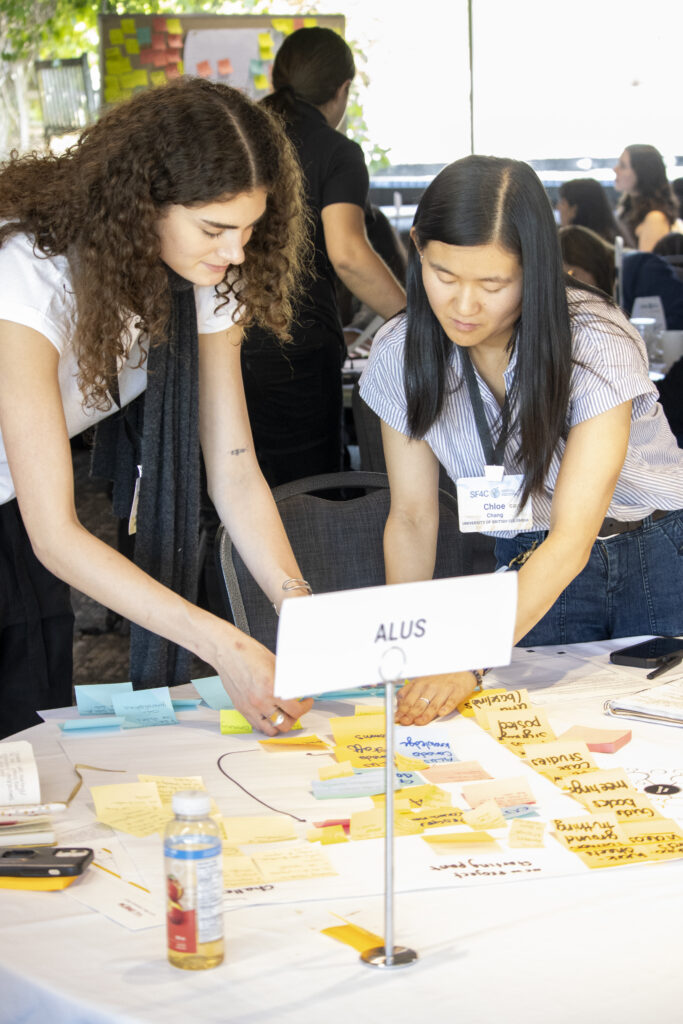
Investors need credible, standardized biodiversity metrics that are practical at farm and community scales. Scientific studies are robust but expensive and slow; monitoring across hundreds of sites requires simple, repeatable indicators that still meet expectations from global reporting frameworks. Students in this group were tasked with identifying simple, scalable and scientifically credible biodiversity indicators that ALUS can measure on farms to provide investors with clear, evidence-based confidence in the impact of its restoration projects.
To better understand the problem, students compiled biodiversity metrics that are typically used by investors across sectors, including food companies, insurance companies, government agencies, NGOs, and more. Students then selected cost-effective, easy-to-measure indicators that emphasized area-based and species-based biodiversity metrics. To translate these findings into actionable steps students concluded their presentations by recommending field-ready methods that could be used to help lower the cost of data collection and richer storytelling capabilities to a variety of investor groups.
Unlocking Biodiversity Financing Models
Even with strong science and field programs, biodiversity lacks a clear, efficient mechanism for markets to track and incentivize progress – leading to a substantial funding gap in global investment in nature‑based solutions (NbS). Students in this group were tasked with uncovering financing mechanisms that could attract sustained institutional and private investment in biodiversity by anchoring funding to concrete outcomes and standardized indicators.
To better understand the problem, students developed case studies on four successful financing frameworks to better understand the benefits and drawbacks of each model. Based on their research, they assembled a series of recommendations for ALUS that included the development of a new biodiversity ‘credit’ and associated environmental, social and governance indicators.
Communicating Biodiversity’s Value
Biodiversity is harder to quantify than carbon, and investors may respond to biodiversity information in different ways. Our fourth student group was in charge of assessing communication strategies and developing a communication’s framework that contextualizes, visualizes and humanizes biodiversity impacts on agricultural lands, positioning ALUS as a national leader in communicating the benefits and opportunities of nature‑positive agriculture.
To better understand the problem, students looked at the difference between individual and institutional donors, and how their respective decisions around investments are often made. This group recommended a hybrid strategy to share information with different groups of investors based on the indicators that mattered most to them.
Conclusion
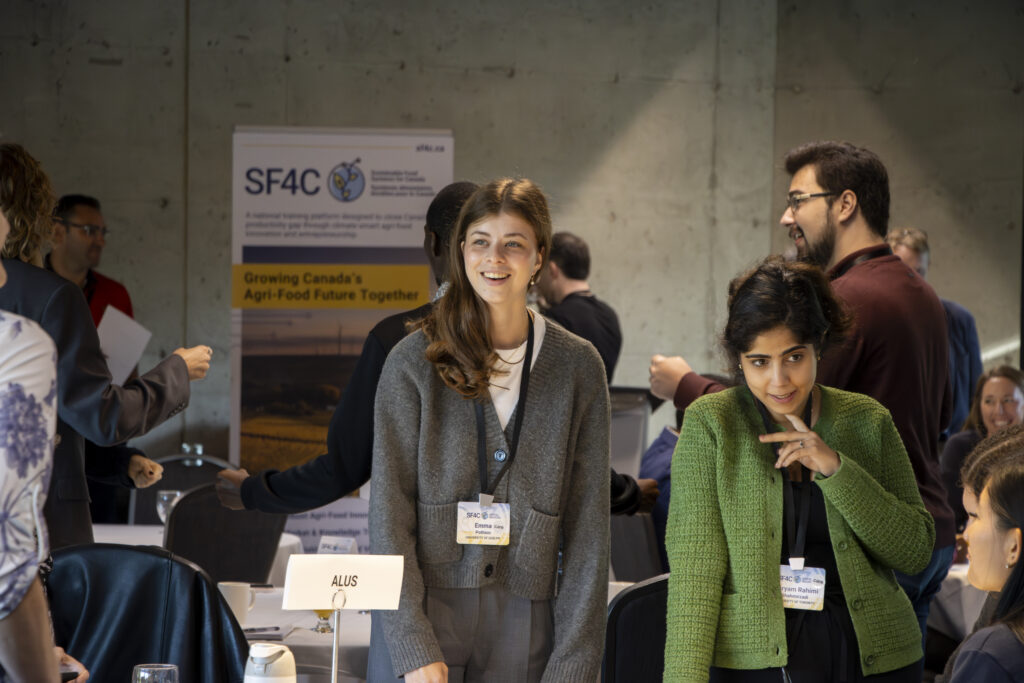
This collaboration between ALUS and the CARE program demonstrates the power of experiential learning in tackling real-world challenges. By bringing students together with industry partners, the project helped to produce solutions that ALUS can act on today while giving students hands-on experience in policy, finance, data systems, and communications. This program, and other experiential education programs within our portfolio, reflects the unique strength of experiential education at the Arrell Food Institute, where we focus on creating opportunities where learning drives impact, and impact deepens learning.
Sustainability in our food systems translates to more than just food security and nutrition. It’s resilience, it’s conservation and it’s economic sustainability. I’m excited for the opportunity to be part of the solution! The CARE [program] was more than just ideation for better food systems in Canada, it was a chance to narrow down into the environmental pillar of sustainable food systems, and look at what we can do to better monitor the value of biodiversity we achieve through our restoration efforts in agricultural landscapes and how to better translate this into, not only policy conversations but better investment into nature-based solutions. This is an amazing opportunity to dig deep into how integrated landscape approaches enhance not only our food security and nutrition but also contributes to biodiversity conservation and the environment as a whole! — Keith May, International Forestry Student at UBC.
Learn more about AFI Experiential Education programs, like the CARE program by heading to the link: Education – Arrell Food Institute